

Thyroid Imbalances in Perimenopause & Menopause
Thyroid issues are one of the most common — and most overlooked — drivers of midlife symptoms.
During perimenopause and menopause, shifting hormones place new demands on your thyroid, metabolism, and stress response — often long before standard labs flag a problem.
If you’re dealing with stubborn weight changes, persistent fatigue, brain fog, or feeling unlike yourself, your thyroid may be part of the picture.
At Peace & Calm Health, we don’t look at the thyroid in isolation.
We evaluate how your thyroid is functioning within your whole physiology — alongside hormones, stress, metabolism, and digestion.
Does This Sound Like You?
- You feel tired most days, even after a full night’s sleep
- You’ve been told your thyroid labs are “normal,” but you don’t feel fine
- You’re already on thyroid medication and still don’t feel like yourself
- Your weight, energy, mood, or focus has changed in midlife — and nothing seems to help
- You feel overwhelmed by conflicting information and unsure where to start
Often, people are told these changes are “normal,” stress-related, or simply part of getting older — yet that explanation doesn’t feel complete.
Many thyroid symptoms overlap with perimenopause and menopause, which is why they’re frequently dismissed or missed entirely.
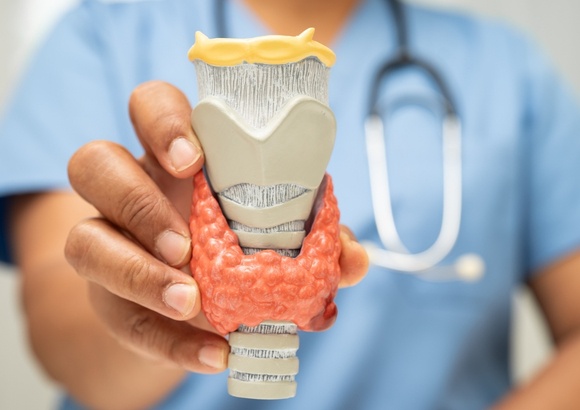
Understanding the Thyroid–Hormone Connection
Your thyroid helps regulate:
- Metabolism and weight regulation
- Body temperature
- Energy and stamina
- Digestion
- Mood and mental clarity
But your thyroid doesn’t work alone.
It responds to signals from the brain, adrenal stress hormones, blood sugar balance, gut health, and sex hormones like estrogen and progesterone.
In midlife, shifts in estrogen and cortisol can change how thyroid hormones are:
- Produced
- Converted (T4 → T3)
- Used by your cells
That’s why symptoms can appear even when TSH looks “normal.”
When one part of this system is under strain, the effects ripple outward — impacting energy, weight, sleep, and resilience.
Signs & Symptoms of Thyroid Imbalance
Common hypothyroid (low thyroid activity) symptoms:
- Unexplained weight gain or difficulty losing weight
- Fatigue, sluggishness, or low motivation
- Brain fog, poor concentration, or memory changes
- Dry skin or thinning hair
- Sensitivity to cold
- Heavier or more frequent menstrual cycles
Hyperthyroid (overactive thyroid) symptoms may include:
- Unintended weight loss
- Anxiety, nervousness, or palpitations
- Heat intolerance or excess sweating
- Lighter or irregular periods
- Muscle weakness
Many of these symptoms overlap with perimenopause, which is why thyroid concerns are often misattributed or overlooked.
Why a Medication-Only Approach Often Falls Short
Thyroid medication can be helpful — and sometimes necessary — but it’s rarely the full solution on its own.
Many people are prescribed medication without a deeper evaluation of:
- Iron, B12, or vitamin D status
- Blood sugar and insulin patterns
- Chronic stress and sleep disruption
- Gut health and inflammation
- Autoimmune activity (such as Hashimoto’s)
When these contributors aren’t addressed, symptoms can persist — even as medication doses increase.
This is especially common during perimenopause and menopause, when multiple systems are shifting at once.
The Functional & Integrative Approach to Thyroid Health
At Peace & Calm Health, thyroid care is part of a whole-body, midlife-specific strategy. We begin with a comprehensive review of:
- Thyroid physiology (beyond TSH alone)
- Stress hormones and sleep patterns
- Blood sugar balance and metabolism
- Nutrient status and gut health
- Inflammatory and autoimmune drivers
When medication is appropriate, we use it thoughtfully — alongside nutrition, lifestyle, and targeted support to improve how your body actually uses thyroid hormone.
The goal isn’t just better labs — it’s feeling clearer, steadier, and more like yourself again.
Safety
Our goal is to support your thyroid so your whole body feels better.
As we improve sleep, nourishment, stress patterns, and key nutrients — and coordinate thyroid care — many people notice:
- Steadier energy
- Clearer thinking
- Improved mood
- Better digestion
Your safety comes first.
Seek urgent care for:
- Chest pain or trouble breathing
- Fainting or severe weakness
- New confusion
- A rapidly enlarging neck mass
If you are pregnant, trying to conceive, or breastfeeding, tell us so we can tailor care appropriately.
When needed, we collaborate with your primary care clinician, OB-GYN, or endocrinologist so functional, integrative, and medical care work together safely.
Frequently Asked Questions
Not always. “Thyroid imbalance” is a broad term describing how the thyroid is functioning. Hashimoto’s (autoimmune low thyroid) and Graves’ (autoimmune high thyroid) are specific diagnoses. We listen to your symptoms, review your history, and use targeted labs to understand what’s happening in your body.
This is very common, especially in perimenopause and menopause. We look beyond a single TSH value and consider trends over time, along with iron, B12, vitamin D, sleep quality, stress hormones, blood sugar, and inflammation — all of which strongly influence symptoms.
Yes. Regular meals with enough protein, fiber, and nutrients — plus consistent sleep and stress support — help stabilize energy, mood, and metabolism. These foundations often improve how thyroid medication works when it’s needed.
Some people do, while others need adjustments at different life stages. Hormonal shifts during perimenopause and menopause can change thyroid needs over time. We reassess regularly as your body changes.
These nutrients support thyroid health, but more is not always better. Supplementing without guidance can worsen symptoms. We personalize recommendations to avoid over- or under-supporting the thyroid.
Usually yes. We match movement to how your body feels now — often starting gently and building intensity as energy and recovery improve.
Yes. With your permission, we collaborate with your primary care clinician, OB-GYN, or endocrinologist so medication decisions and labs are safe and well coordinated.
Shifts in estrogen and progesterone can change how thyroid hormones are produced, converted, and used by your cells. Stress hormones, sleep disruption, and metabolic changes also become more influential at this stage — so symptoms may appear or intensify even before labs fully change.
Ready To Feel
Clear, Supported, And Like Yourself Again?
Your next step is simple.
A warm, pressure-free conversation where we explore your symptoms, goals, and determine whether one of our programs is the right fit for you.